New members struggle most in their first weeks on the protocol, when questions about food and devices come up constantly. The question they asked coaches most often was "can I eat this?" Human coaches can't be there around the clock, and some moments need a human, not a bot. The real question wasn't whether we could build a chatbot. It was how to give members instant, clinically safe help without weakening their relationship with their coach.
Viv gives clinically safe answers, and hands the moment to a human coach when a member needs a person rather than a bot.
I explored practical flows in low fidelity first.
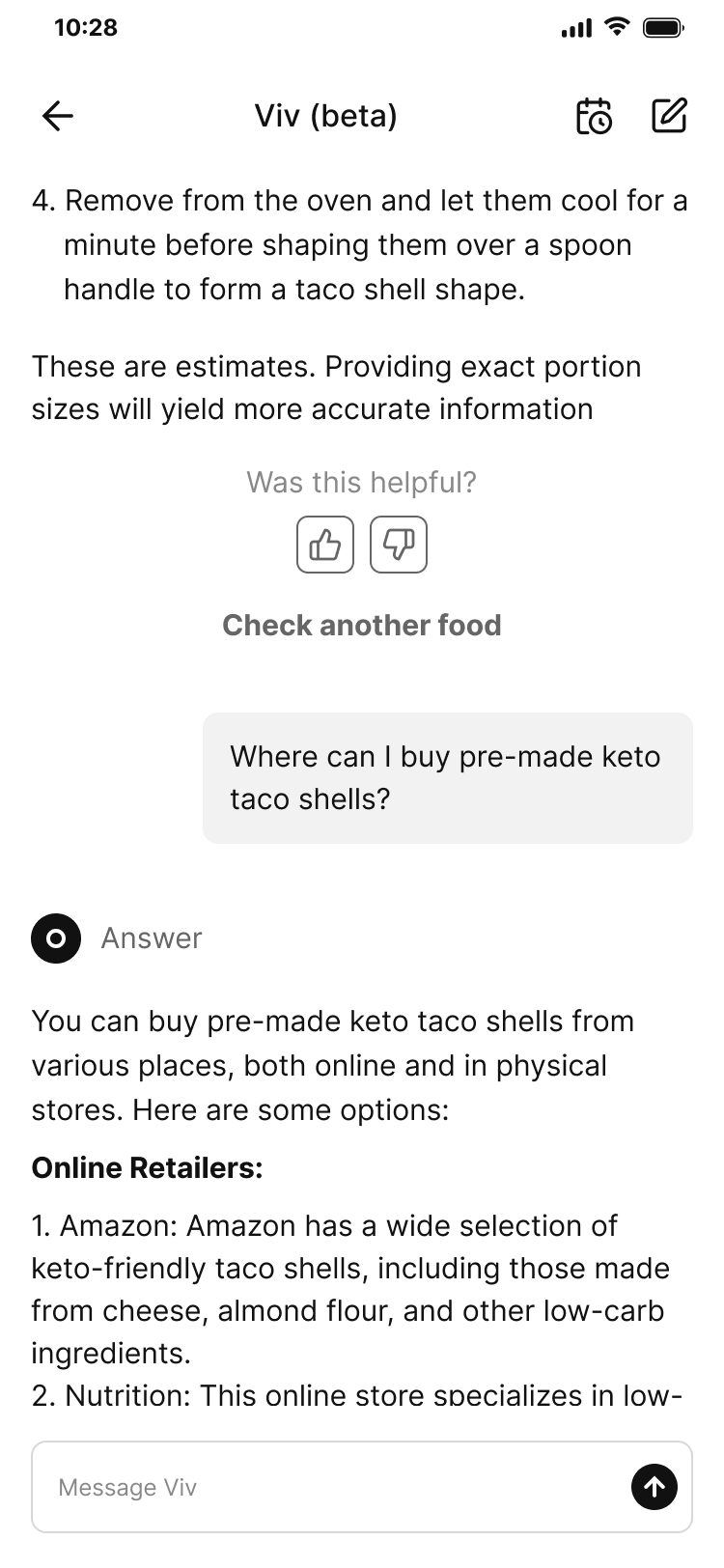
An AI coach lives or dies on its dialogue, so I built a working prototype early and tested real conversations instead of polishing static screens. I set up Virta's user testing from scratch, got leadership to adopt UserTesting.com, and coached junior designers in the method.
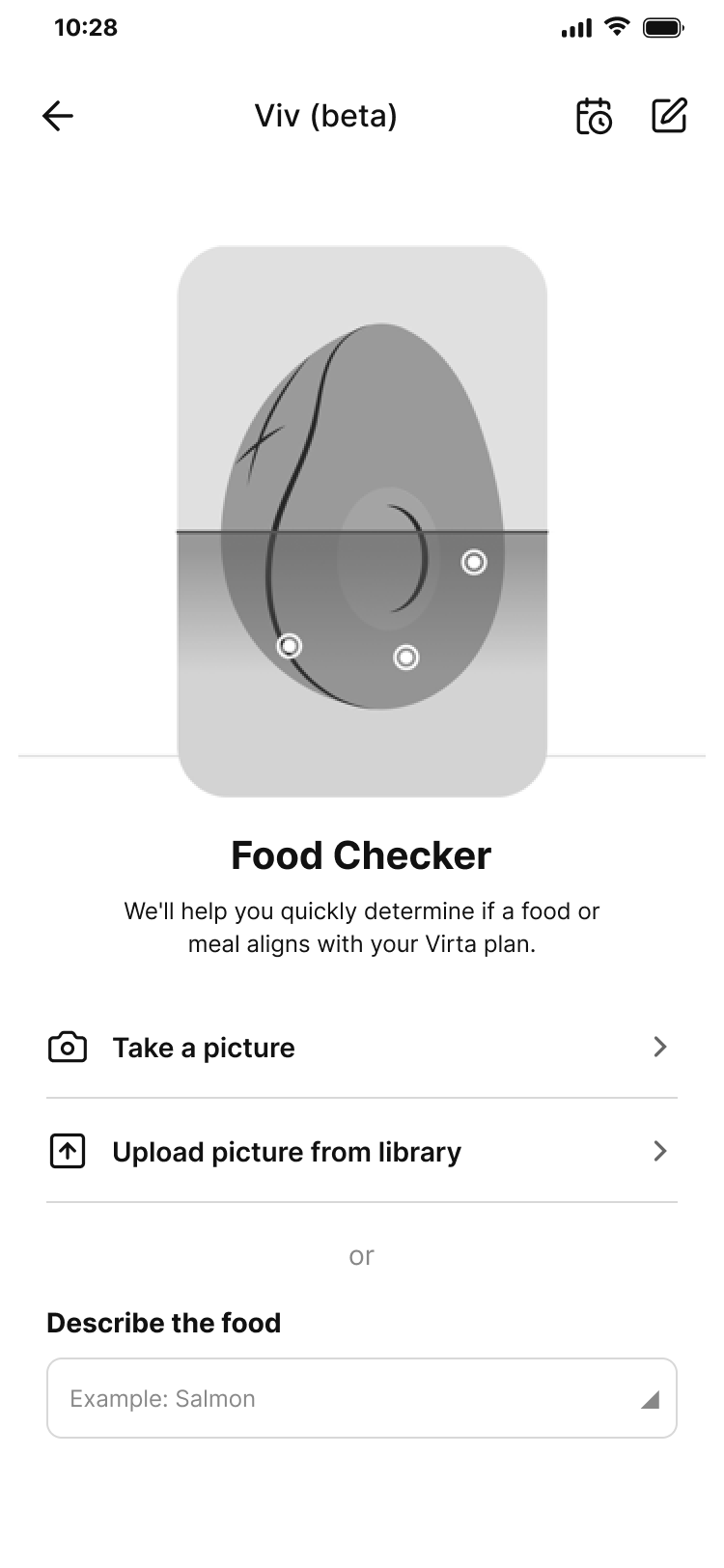
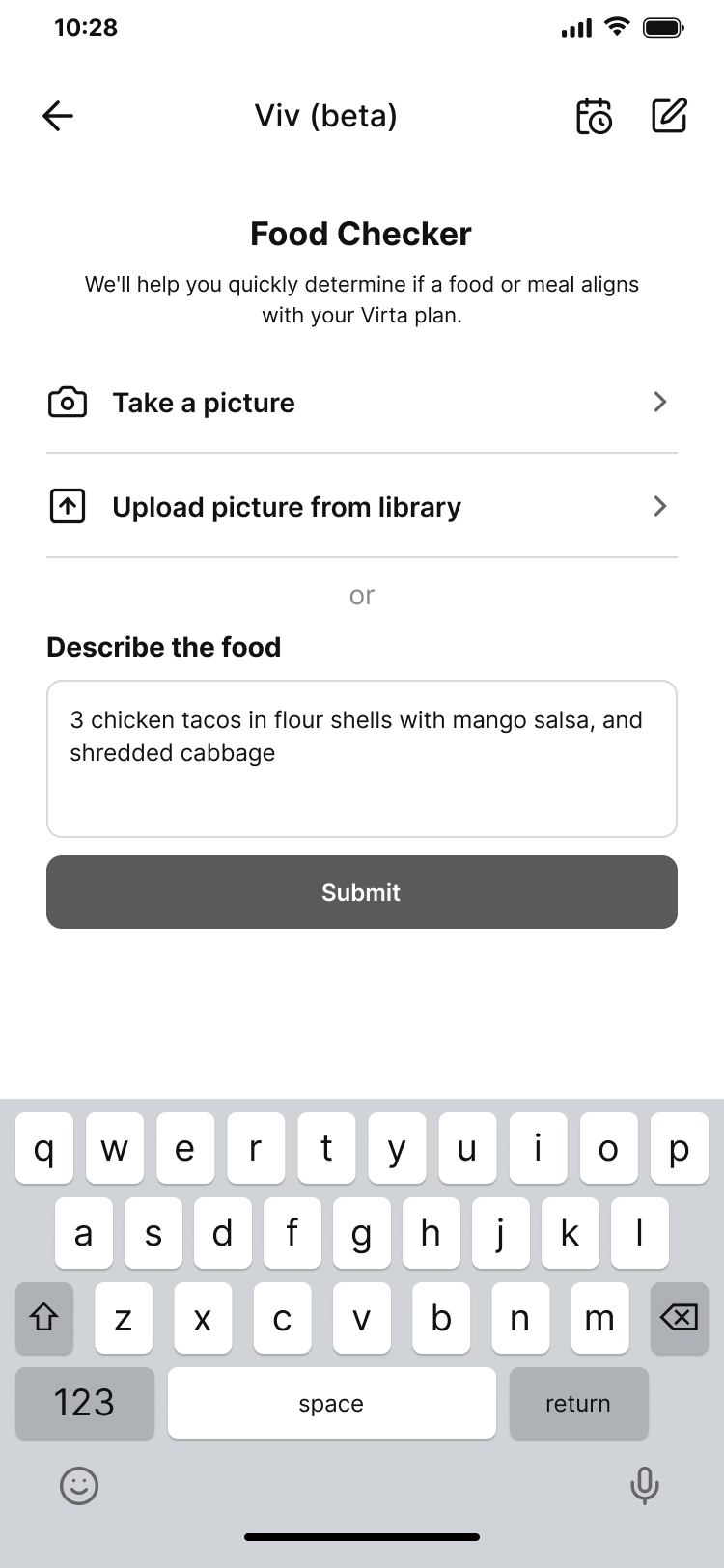
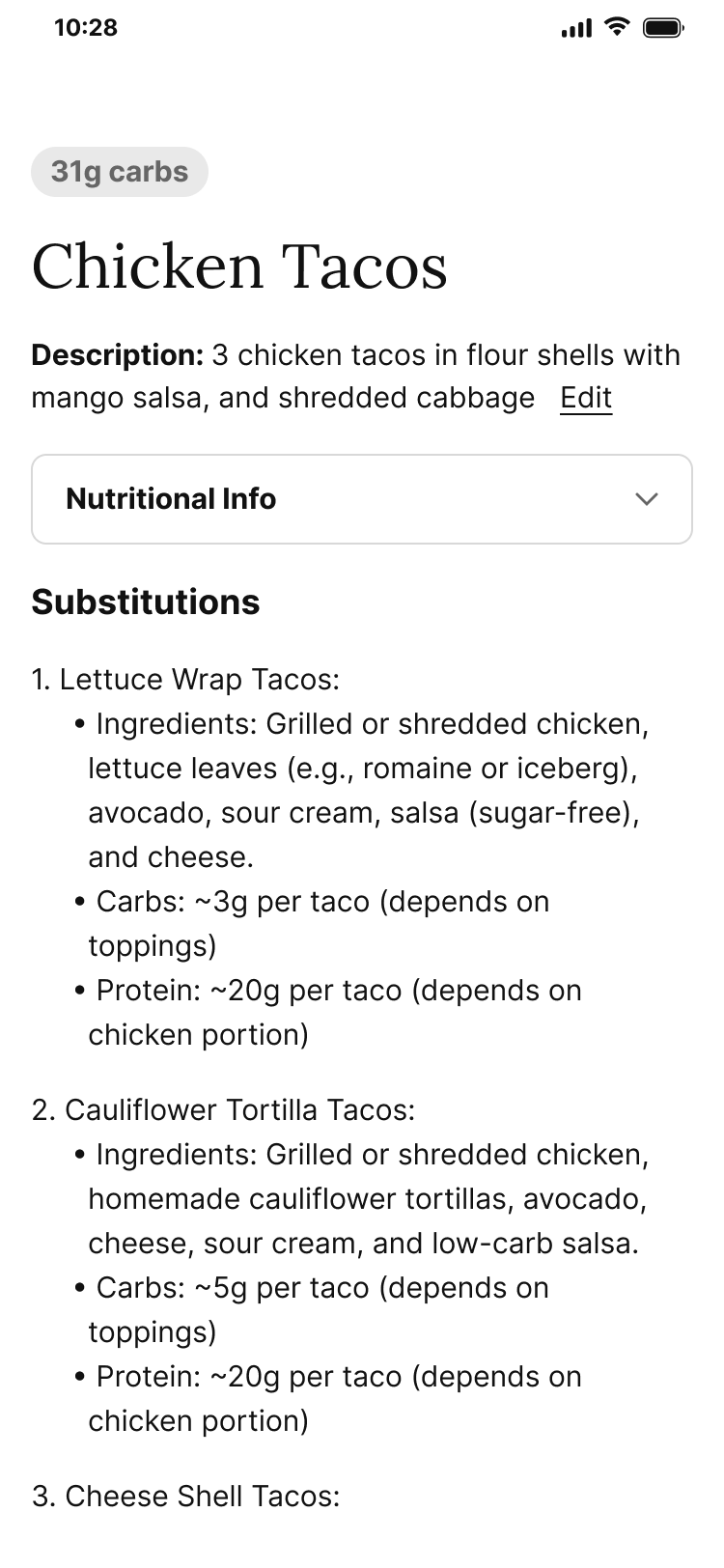
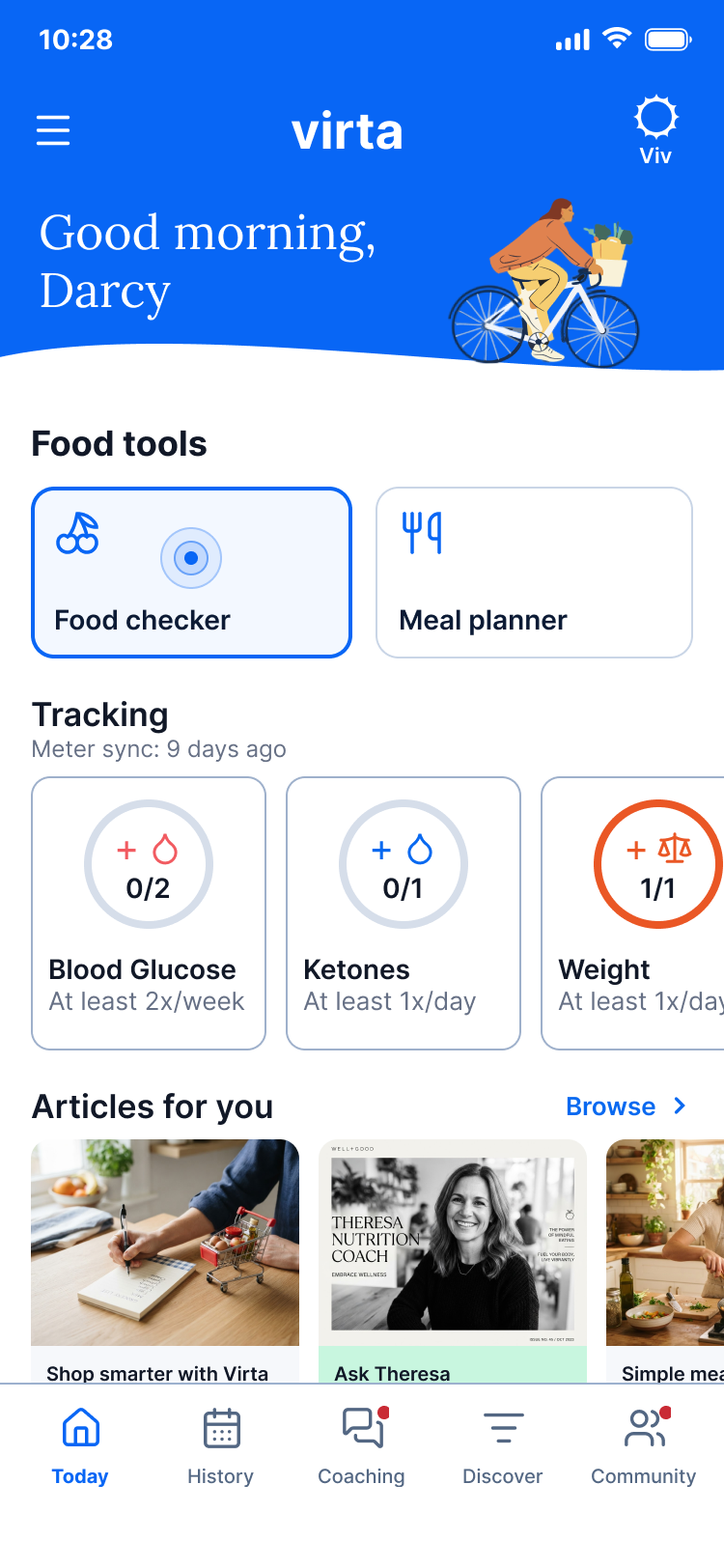
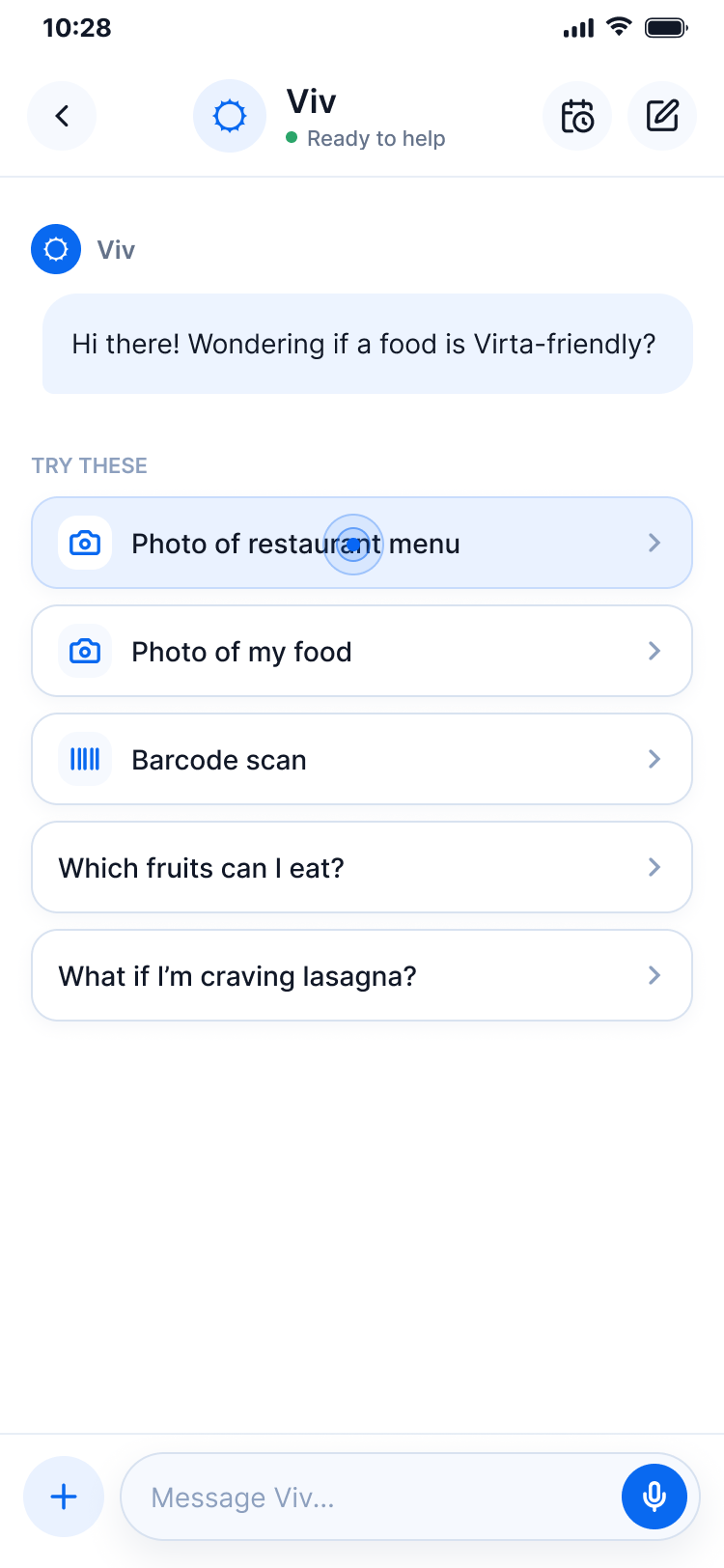
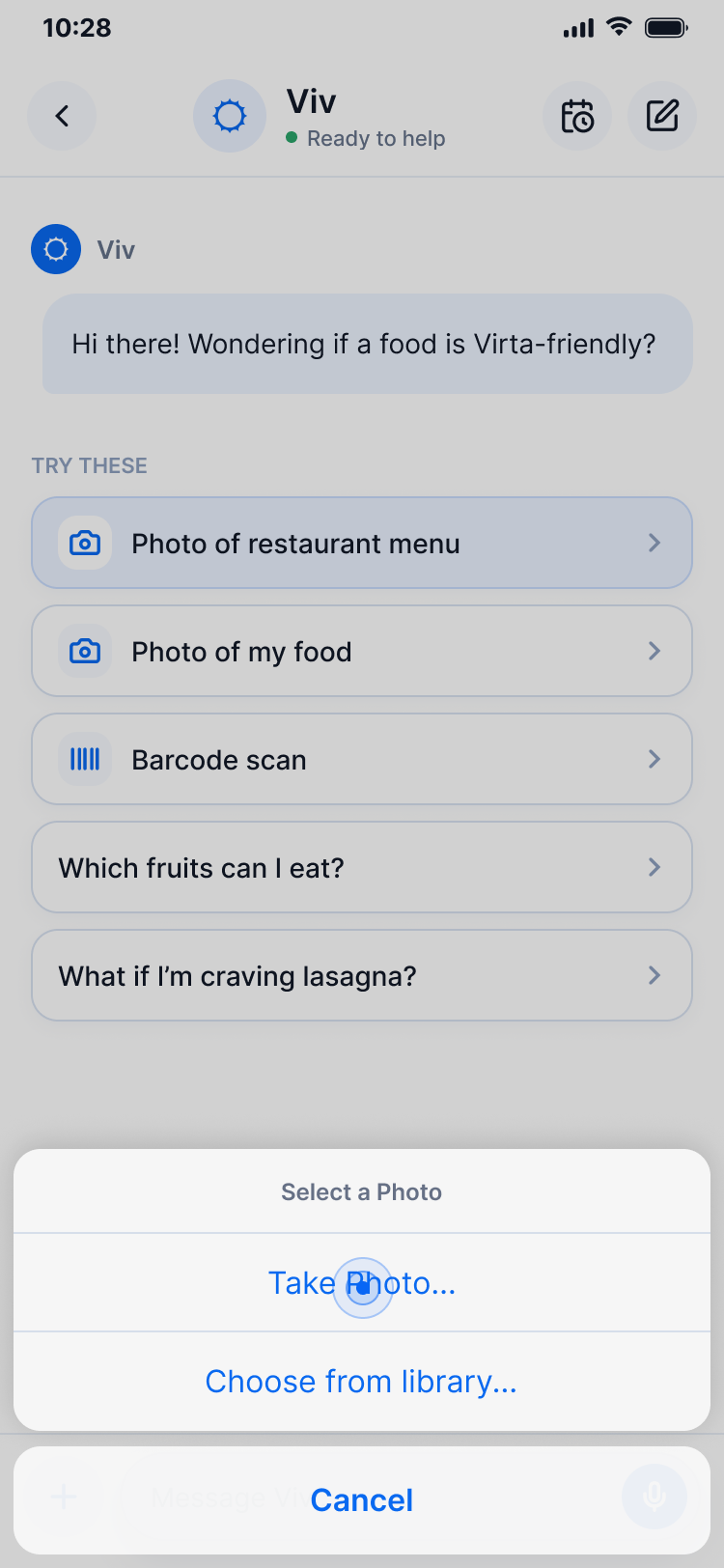
Then I added photo-based convenience to food checker. It's a practical AI answer to the question members asked coaches most often: can I eat this?
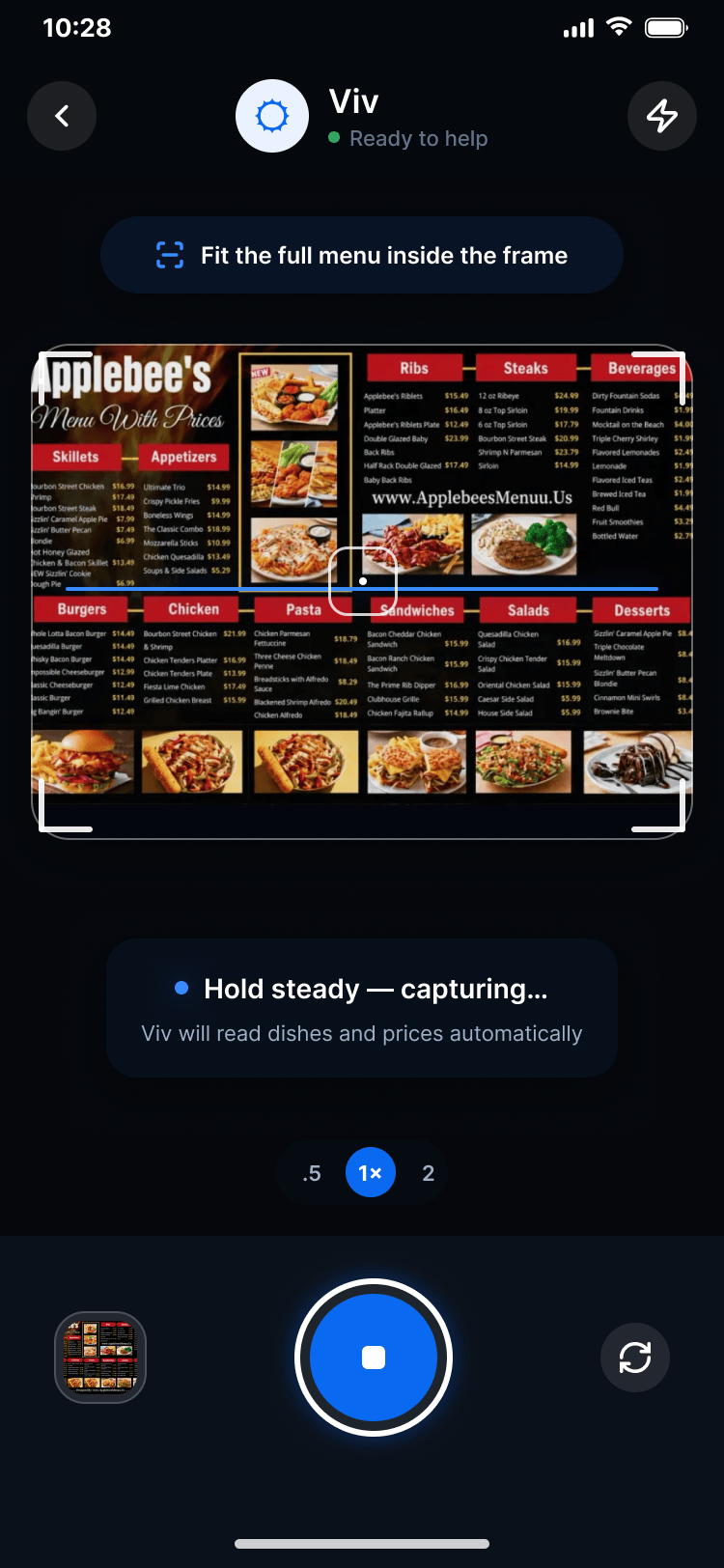
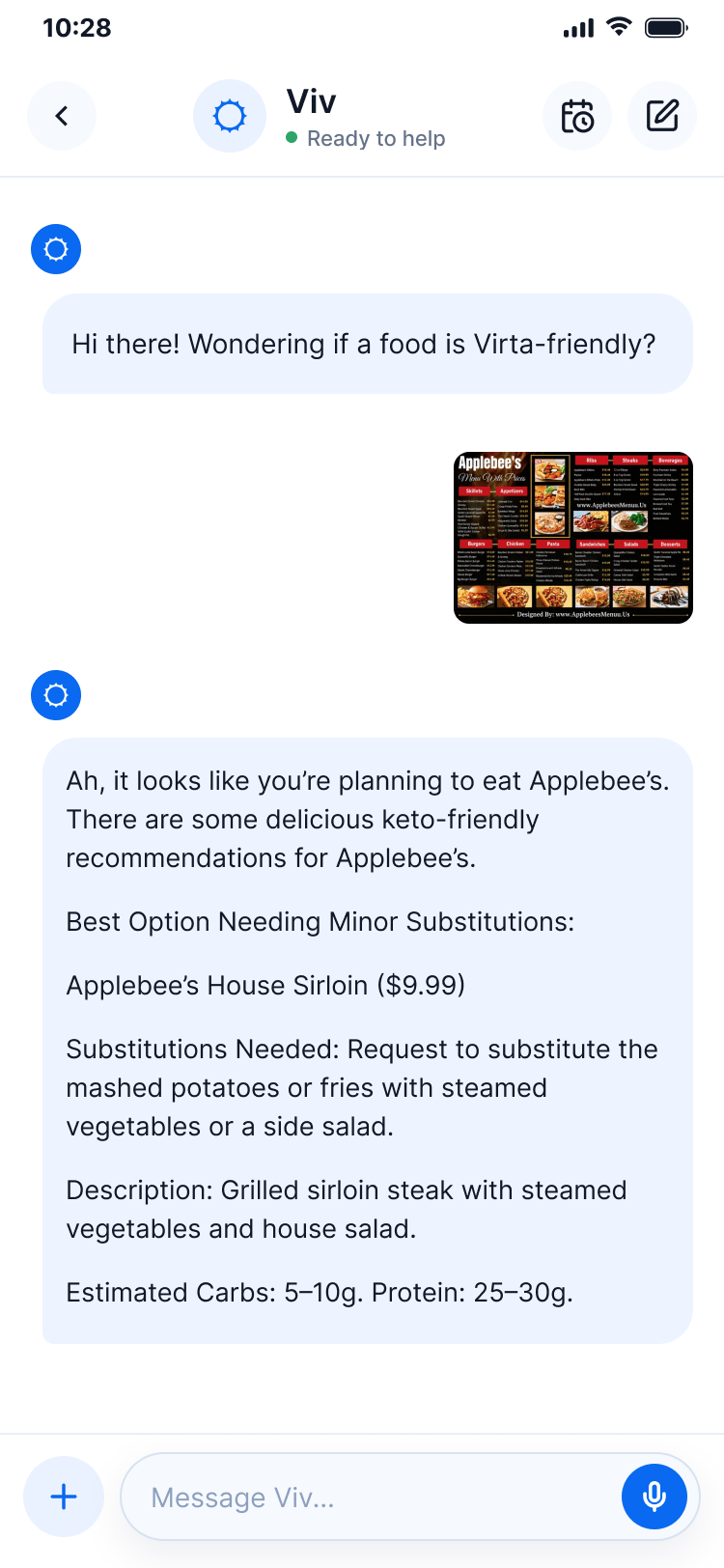
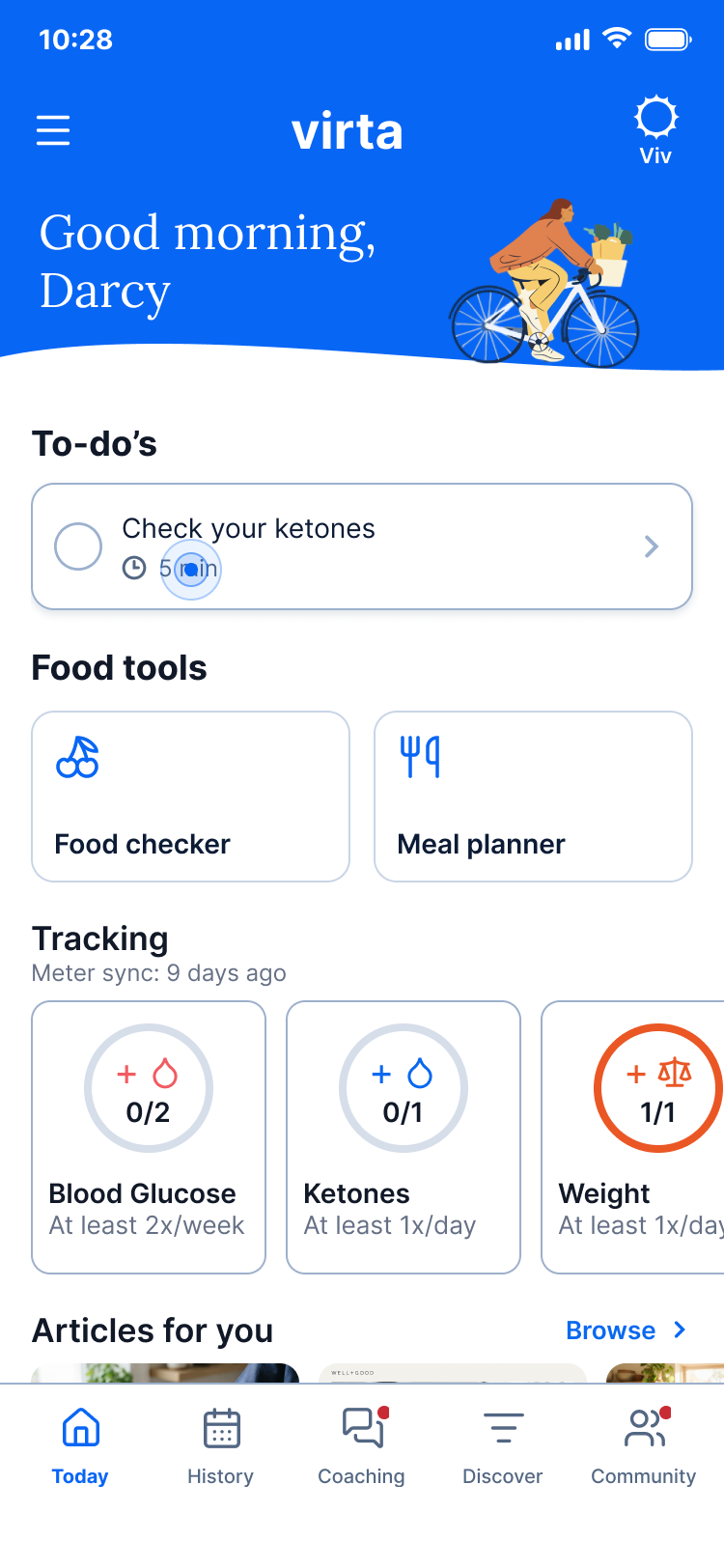
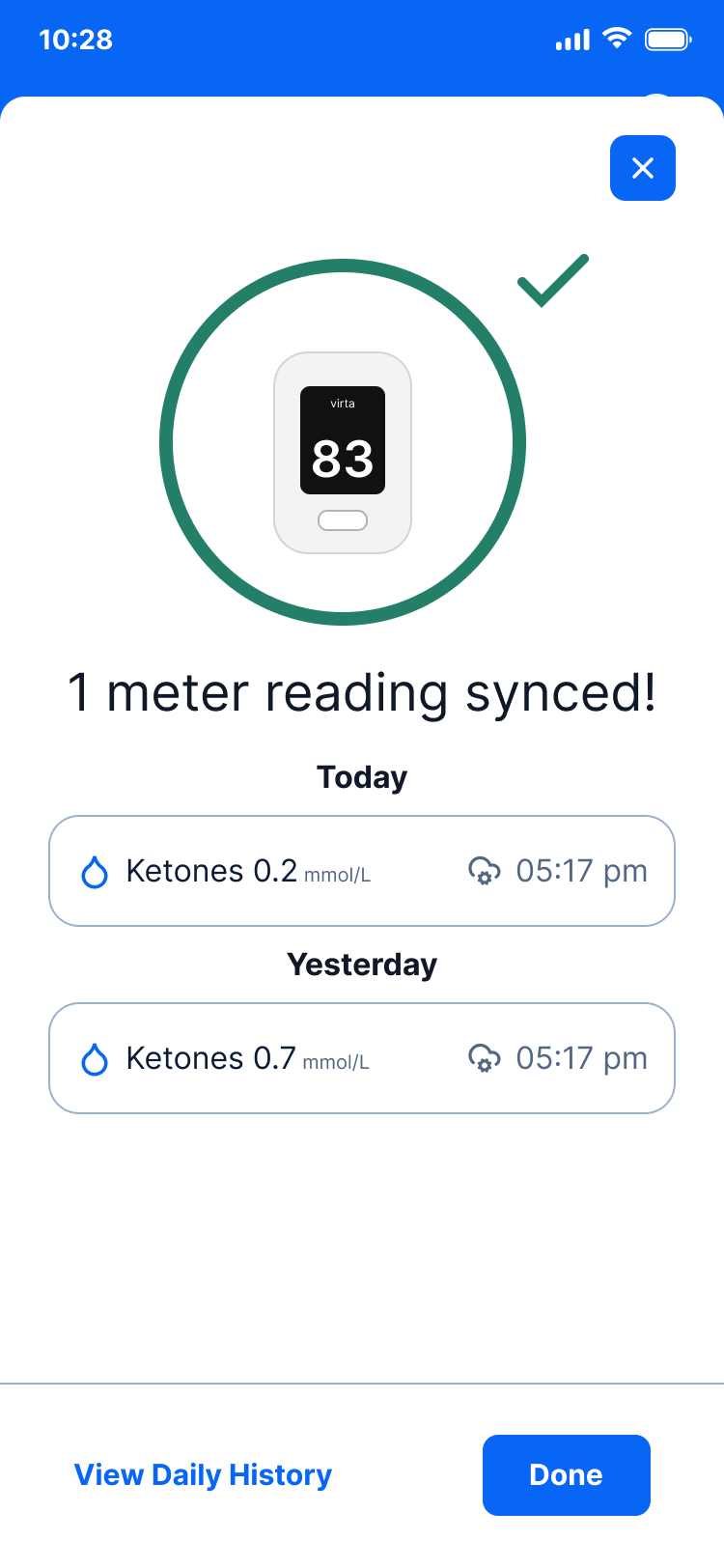
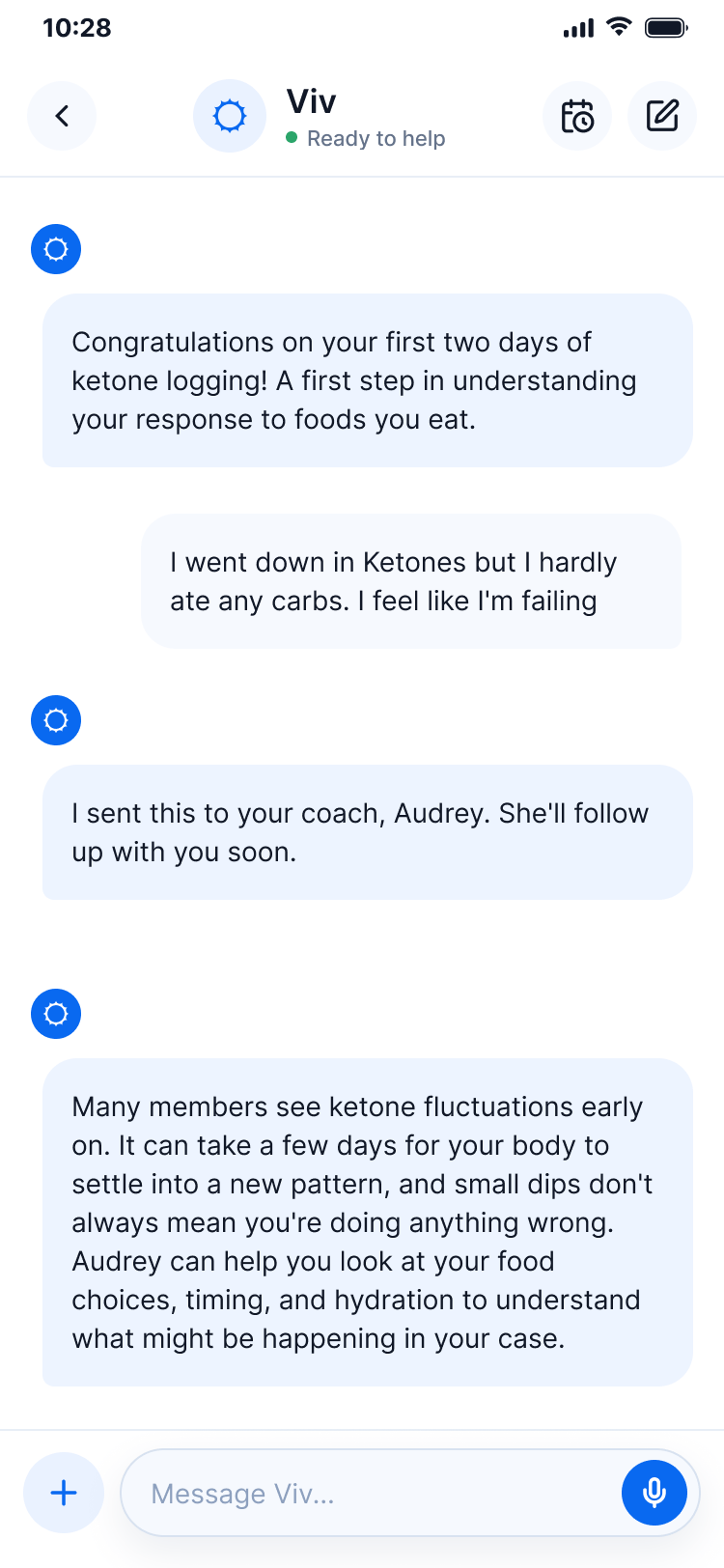
Coach handoff: when a member feels like they're failing, Viv reassures them and brings in their human coach rather than trying to motivate them itself.
"I really like using an AI assistant in here. Yep... excellent." (UserTesting participant)
"I never knew that before. Thanks Viv!" (Virta member, beta)
Conversation proved extremely useful for education and for answering the long tail of members' very different questions. Proactive conversational push notifications did not work. They got about a 5% response rate, against about 12% for our standard reminders. To avoid burning out the notification channel, we stopped them. The lesson: members come to Viv when they need an answer, and pulling them in works better than pushing.